
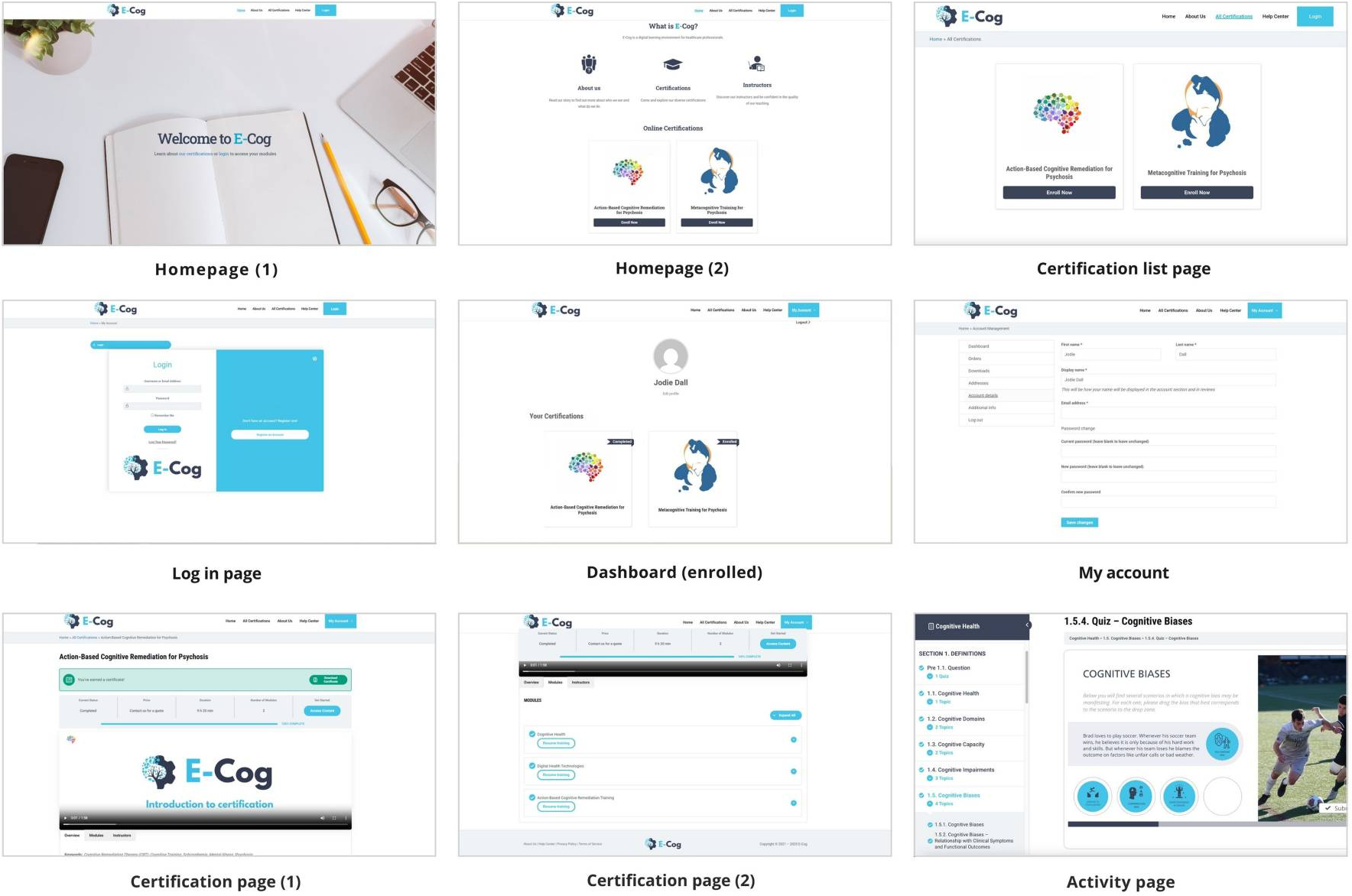
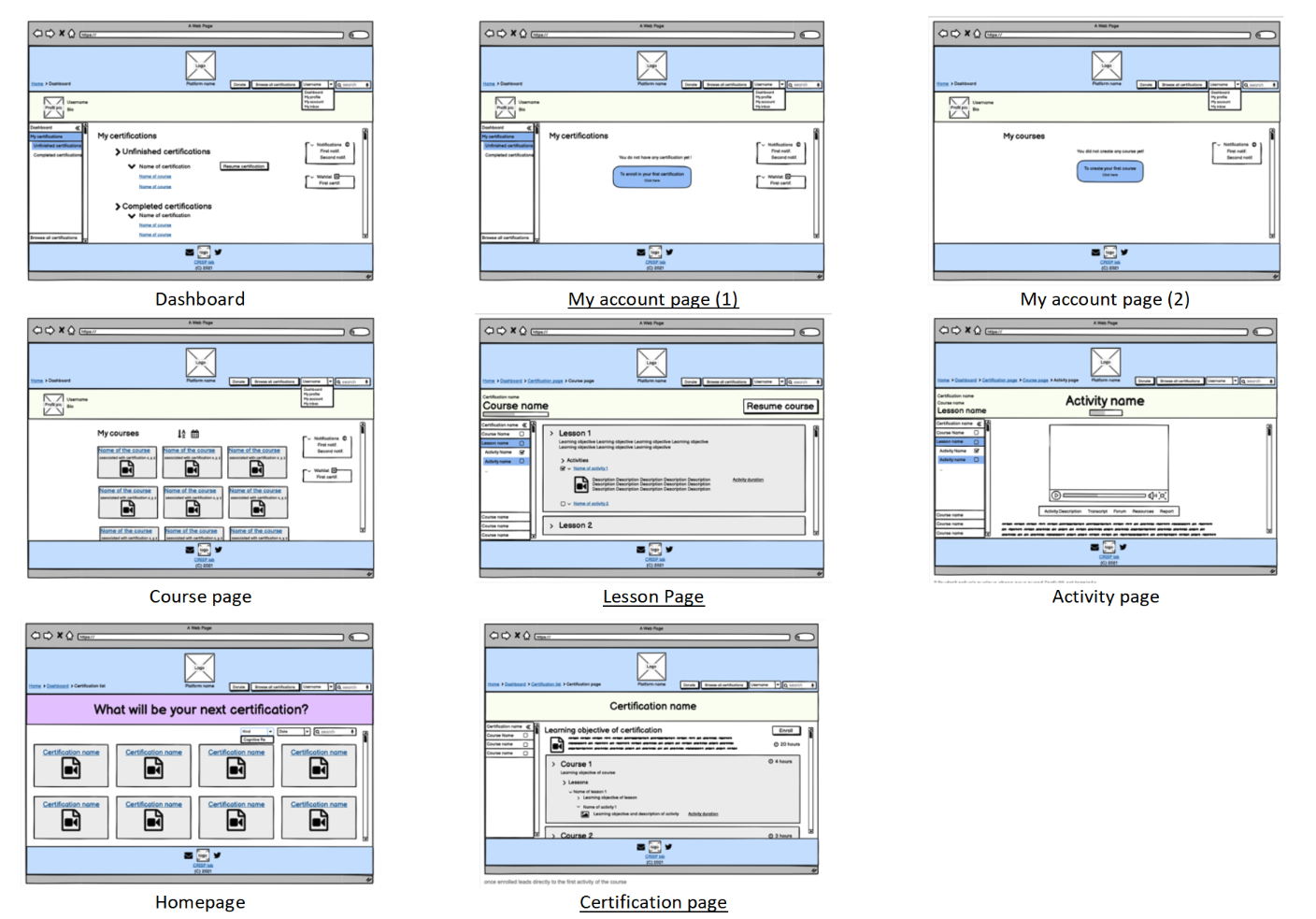
J’ai rencontré les équipes de recherche et transformé leurs besoins très précis en une architecture flexible pouvant évoluer avec le projet.
Plateforme de formation E-Cog pour les professionnel·les de la santé
- En vedette
- Web

Introduction
Quel était ce projet?
Une plateforme de formation en ligne conçue pour former des professionnel·les de la santé à deux programmes en santé mentale, dans plusieurs sites de recherche canadiens.
Mon rôle
J’ai principalement agi comme développeuse principale, tout en contribuant au projet depuis sa conception : analyse des besoins, maquettes, tests utilisateurs, création du contenu de formation et rédaction d’un article scientifique.
Détails techniques
CMS WordPress, LMS LearnDash, PHP, JavaScript, HTML, CSS.
Période
2020-2026 : développement, évaluation et déploiement dans plusieurs sites canadiens.
Problème
Les professionnel·les de la santé avaient peu accès à de la formation en ligne pour deux programmes en santé mentale.
- La formation était principalement offerte en personne ou dans des contextes de recherche.
- Les programmes étaient donc difficiles à déployer à grande échelle et peu visibles hors des réseaux spécialisés.
Solution
J’ai développé une plateforme asynchrone pour rendre ces programmes accessibles partout.
- Les utilisateurs et utilisatrices suivent leurs formations à leur rythme.
- La plateforme repose sur WordPress, LearnDash et du contenu interactif SCORM.
- L’architecture flexible et auto-hébergée facilite la personnalisation, les mises à jour et la maintenance.
Processus
J’ai défini la pile technologique, le serveur, l’hébergement, la base de données et la structure générale du système.
Lorsque l’ancien LMS est devenu trop instable et demeurait hors de notre contrôle, j’ai sélectionné une nouvelle solution et migré la plateforme vers un environnement auto-hébergé.
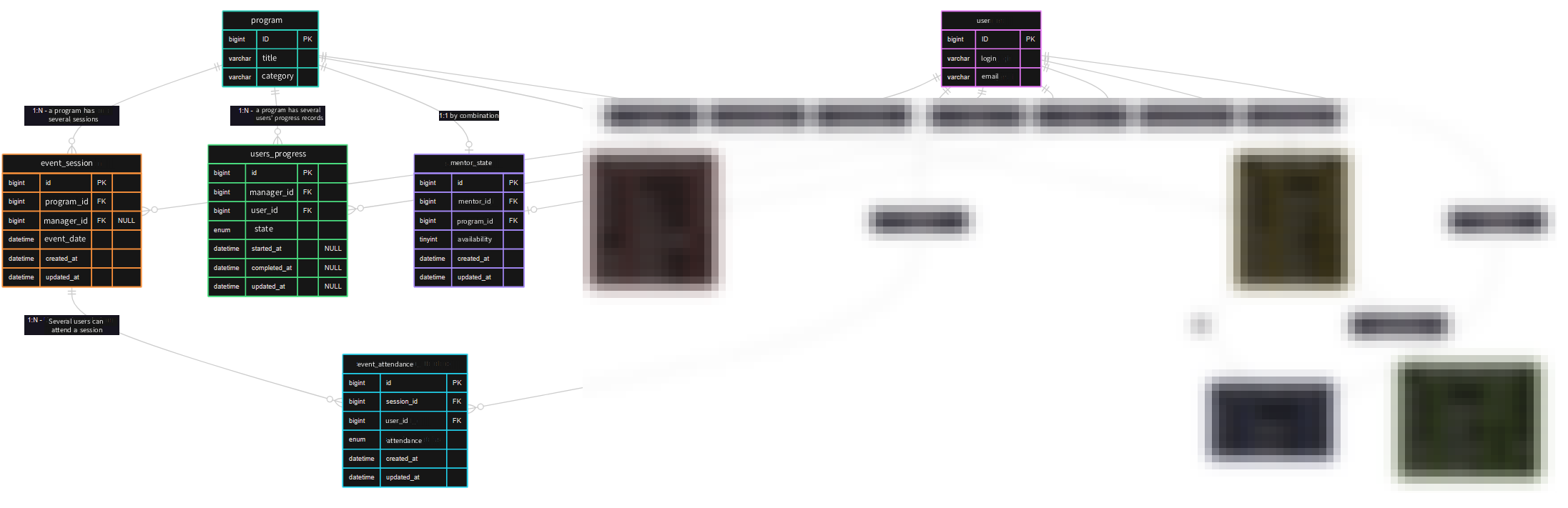
J’ai conçu les schémas de données, les interfaces, les API et les diagrammes de classes en privilégiant la maintenabilité.
J’ai conçu les parcours et les maquettes, puis dirigé le développement du frontend en HTML, CSS et JavaScript et du backend en PHP.
Impact
74+
professionnel·les de la santé se sont inscrit·es sur la plateforme pendant le projet.
6/6
pour la crédibilité et la fiabilité de l’information selon les collègues de recherche ayant testé la plateforme.
88 %
des personnes ayant testé la formation la recommanderaient; 100 % reviendraient suivre d’autres formations.